
An option is a contract that gives the buyer the right to buy or sell an underlying asset at a set price within a set period. The buyer pays a fee called the premium. In Thailand, SET50 Index Options trade on the Thailand Futures Exchange (TFEX), and investors can access overseas markets through brokers.
Key terms
- Call option: the right to buy; benefits when prices rise
- Put option: the right to sell; benefits when prices fall
- Strike price (K): the agreed exercise price
- Premium: the price the buyer pays
- Expiration: the date the contract ends
- Greeks: sensitivity measures such as delta, gamma and theta
Why option buyers know their risk in advance
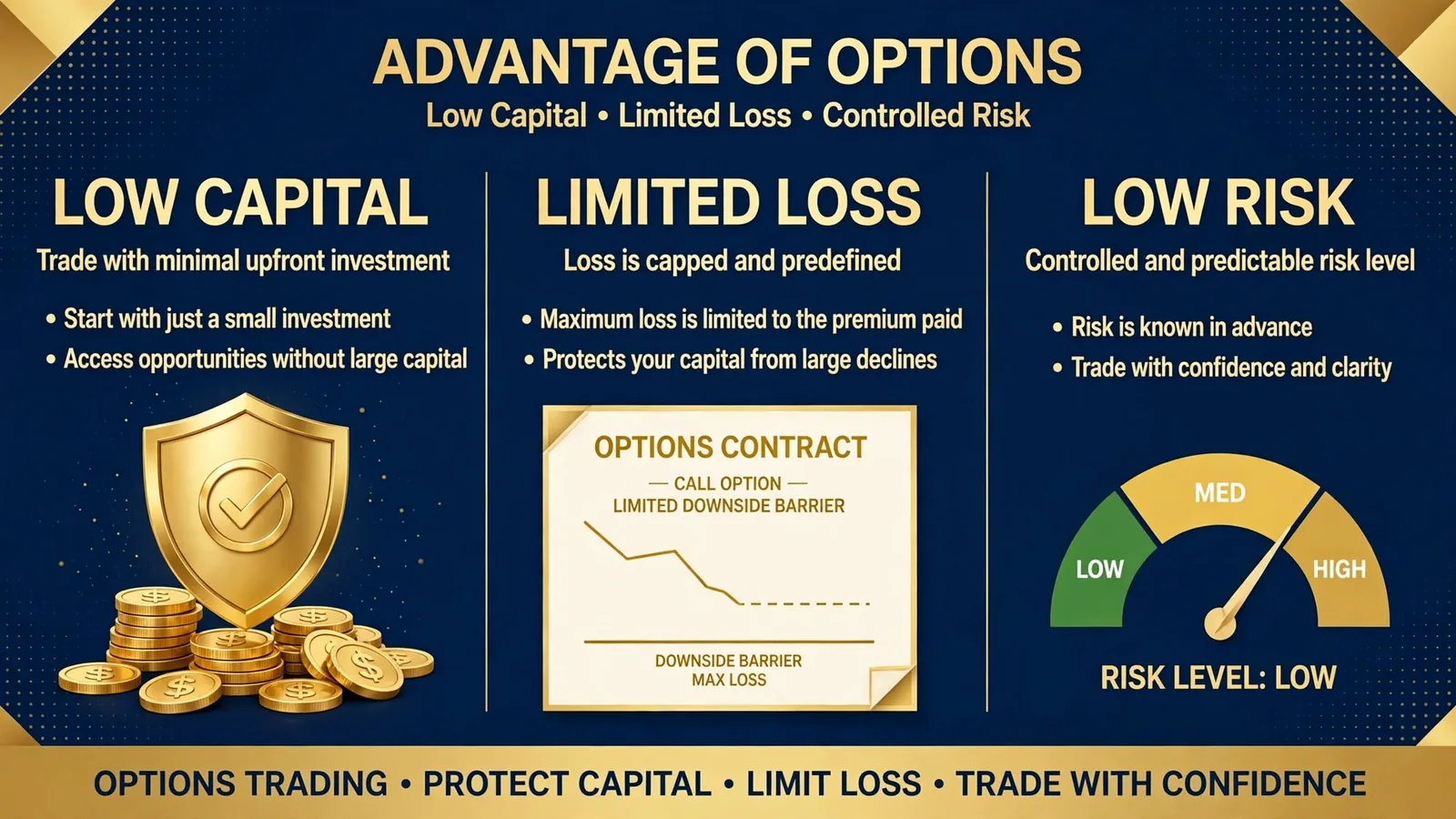
As the buyer of a call or put, your maximum loss is the premium you paid, however far the price moves against you, and you commit less capital than buying the asset itself.
Example: buy a call with strike 100 for a premium of 5. Break-even is 105. If the underlying rises to 115, profit per unit is 10. If it ends below 100 at expiry, the maximum loss is 5.
Opportunities in any direction
- Bull market: buy calls
- Bear market: buy puts
- Sideways market: range strategies, or straddles and strangles when you expect a big move
Risks to respect
- Options expire and lose time value every day
- Option sellers can face much larger risk than buyers and must post margin
- Leverage can make losses a large share of the money invested very quickly
Investing involves risk. This article is educational and is not investment advice.
The Options Trading program goes from fundamentals and theory to real order execution practice, online or in intensive live classes, so you can build strategies, size risk and trade with discipline.