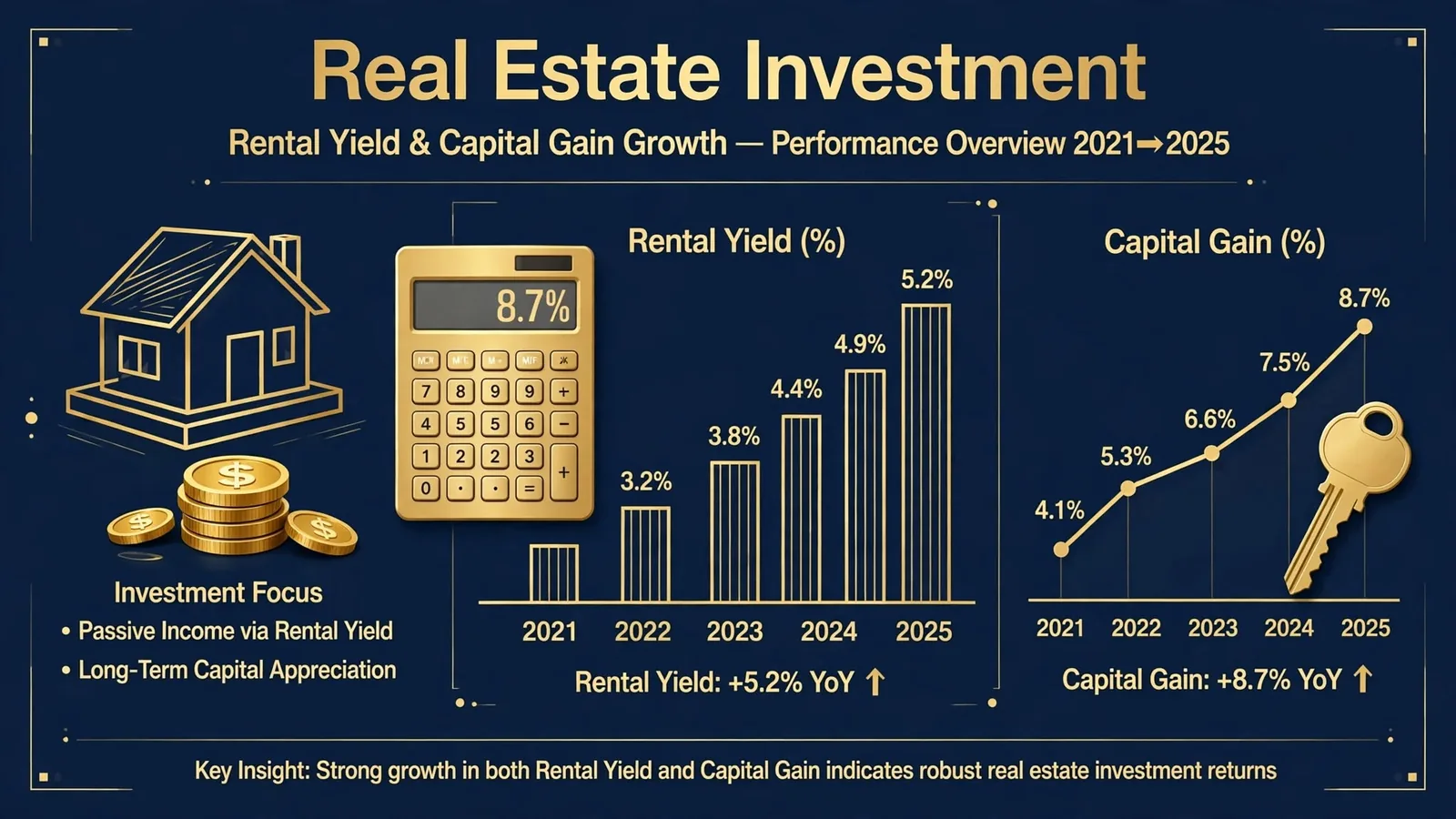


An asking price is not the same as true value. Valuation is an essential skill for buyers, sellers, and owners who need financing or tax planning.
1. Market (sales comparison) approach
Compare recent sale prices of similar nearby properties, then adjust for differences in location, size, floor, orientation, age and condition.
Best for: condos, houses, townhouses and land in active markets.
2. Cost approach
Value = land value + replacement construction cost − depreciation. It answers the question: what would it cost to build this today?
Best for: special-purpose property with few sales, such as factories or custom-built homes.
3. Income approach
Value is based on the net income the property produces, using a capitalisation rate.
Value = net operating income (NOI) ÷ cap rate. A building with NOI of THB 600,000 and a market cap rate of 6% is worth about THB 10,000,000.
Best for: apartments, offices, retail and hotels.
A checking process before you decide
- Data collection: title documents, zoning, size, condition, official appraisal price
- Site visit: access, surroundings, flood risk, planned developments
- Analysis: use at least two methods to cross-check
- Final report: state assumptions and a reasonable value range
Summary
No single method is right for every case. Professionals match the method to the property and cross-check. The Valuation module trains you to value real properties accurately and reliably.