

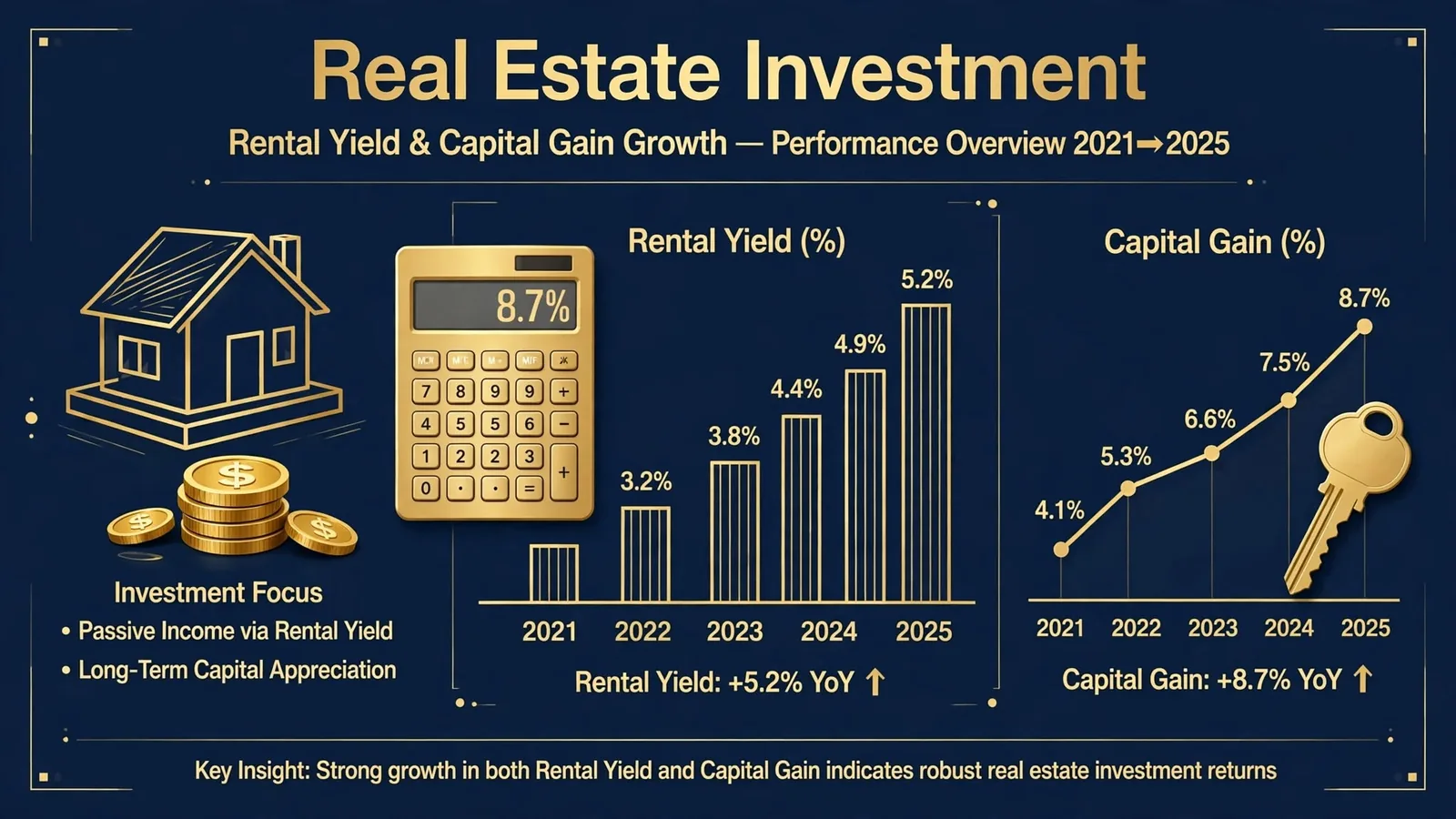
Real estate returns come from two sources: rental income (rental yield) and price growth (capital gain). Professionals always look at both, because a property with strong rent but flat prices and one with rising prices but weak demand perform very differently over time.
1. Gross rental yield: the advertised number
Gross yield = (annual rent ÷ purchase price) × 100
Example: a condo bought for THB 2,000,000 and let at THB 12,000 a month earns THB 144,000 a year, a gross yield of 7.2%.
2. Net rental yield: the number to decide with
Net yield = ((annual rent − annual costs) ÷ total cost) × 100
Using illustrative yearly costs: common fees THB 15,000, tax and insurance THB 5,000, one month vacancy THB 12,000, repairs and furniture THB 10,000. That is THB 42,000, leaving THB 102,000. With a total cost of THB 2,060,000 including transfer and fit-out, the net yield is about 4.95%, almost 2.3 points below the headline figure.
3. Capital gain
Capital gain (%) = ((sale price − total cost) ÷ total cost) × 100
Prices are driven by new infrastructure (roads, rail, malls, hospitals, universities), local supply, and the quality of building management, the one factor owners control.
4. Total return
Approximate annual total return = net yield + annual price growth. This lets you compare property fairly with other investments.
Watch out for
- Developer “guaranteed returns”: always calculate from real market rents
- Vacancy and major repairs: always budget for them
- Taxes and fees on both purchase and sale
In the Real Estate Investment module you practise these calculations on real cases and take home an analysis template for your own properties.